CNN, ANN, and RNN are all types of neural networks used in machine learning and artificial intelligence, each with its own specific architecture and use cases:
- ANN (Artificial Neural Network):
- An ANN is a computational model inspired by the way biological neural networks in the human brain process information. It consists of layers of interconnected nodes (neurons), where each connection has an associated weight. ANNs are used for a variety of tasks, including classification, regression, and pattern recognition. They are the foundational architecture for more specialized neural networks like CNNs and RNNs.
- CNN (Convolutional Neural Network):
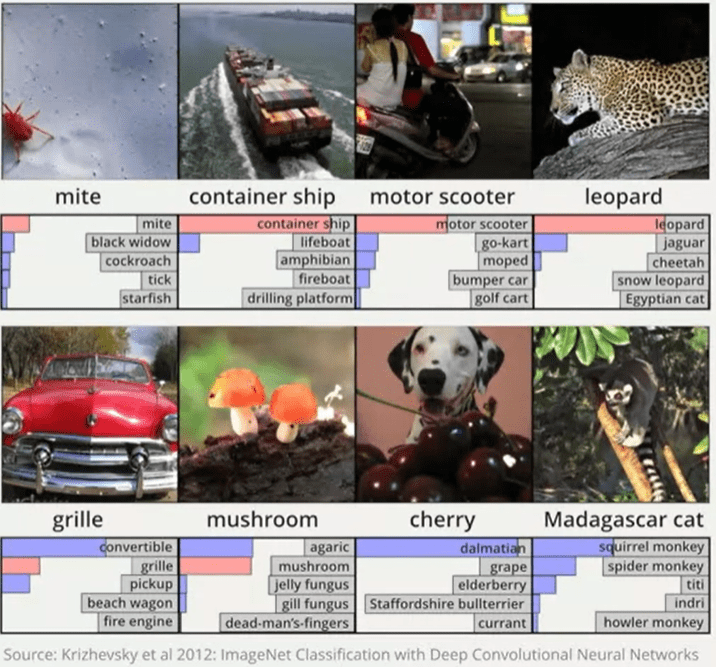
- CNNs are a type of neural network specifically designed for processing structured grid data, such as images. They use a mathematical operation called convolution to automatically and adaptively learn spatial hierarchies of features from input data. CNNs are particularly effective for image recognition and classification tasks due to their ability to capture spatial and temporal dependencies in an image through the use of filters and pooling layers.
- RNN (Recurrent Neural Network):
- RNNs are designed to recognize patterns
In the context of machine learning and neural networks, “bias” can refer to a couple of different concepts:
- Bias in Neural Networks:
- In neural networks, bias is a parameter that is added to the weighted sum of inputs to a neuron. It allows the activation function to be shifted to the left or right, which can be crucial for the model to learn the correct mapping from inputs to outputs. Bias terms help the model fit the data better by providing additional degrees of freedom. In mathematical terms, if a neuron computes a weighted sum of inputs as ( z = w_1x_1 + w_2x_2 + \ldots + w_nx_n ), the bias ( b ) modifies this to ( z = w_1x_1 + w_2x_2 + \ldots + w_nx_n + b ).
- Bias in Machine Learning Models:
- Bias in this context refers to the error introduced by approximating a real-world problem, which may be complex, by a simplified model. This is part of the bias-variance tradeoff, a fundamental concept in machine learning. A model with high bias pays very little attention to the training data and oversimplifies the model, which can lead to under
Also known as back prop, this is the process of back tracking errors through the weights of the network after forward propagating inputs through the network. This is used by applying the chain rule in calculus.
Bounding Box
Cognitive Computing
Machine Learning
Deep Learning
corpus
Entity Annotation
Entity Extraction
Computer Vision
HyperParameter
Intent
Linguistic Annotation
Model
NLG and NLP and NLU
Overfitting
Parameter
Predictive Analysis
Supervised Learning and Unsupervised Learning and Reinforcement Learning
Semantic Annotation
Sentiment Analysis
General AI and Strong AI and Weak AI
Transfer Learning
Turing Test
GAN – Generative Adversarial Network
Heuristic
Perceptron: Single Neuron.
Logistic Regression or Sig-moid Function σ
A function used to activate the weights Network in Interval of 0,1; This function graph looks like a S which is told as Sigma in Greek. This is also known as Logistic Regression.
OpenAI is Open source : ?
OpenAI is not entirely open source. While OpenAI has released some of its models and code as open source, such as the original GPT (Generative Pre-trained Transformer) and certain versions of its reinforcement learning algorithms, many of its more advanced models, like GPT-3 and GPT-4, are not open source. These models are accessible through APIs, which allow developers to integrate them into applications, but the underlying code and model weights are not publicly available. OpenAI has taken this approach to balance the benefits of open research with concerns about safety, security, and misuse of powerful AI technologies.